Best Paint for Kitchen Cabinets in 2026
Why Cabinet Paint Is Not the Same as Wall Paint
The single biggest mistake homeowners make when painting kitchen cabinets is reaching for the same paint they used on their bedroom walls. It seems logical — paint is paint, right? Not even close. Kitchen cabinets endure a level of daily abuse that walls simply never face: constant touching with greasy hands, steam from cooking, temperature swings from ovens and dishwashers, and physical impact from doors opening and closing dozens of times per day.
Wall paint is engineered for vertical surfaces that rarely get touched. Cabinet paint needs to be something fundamentally different. The best cabinet paints share three critical properties that standard wall paint lacks:
- Hardness: Cabinet paint must cure to a rock-hard finish that resists scratching, chipping, and denting. Standard latex wall paint stays relatively soft and will scratch with a fingernail even weeks after application.
- Adhesion: Cabinets are typically made of smooth, sealed surfaces — lacquered wood, MDF with factory finish, or thermofoil. Cabinet paint must bond aggressively to these slick surfaces without peeling, even under the stress of repeated opening and closing.
- Self-leveling: The best cabinet paints flow out to a smooth, brush-mark-free finish. This is what gives professionally painted cabinets that factory-like appearance. Wall paint does not need to self-level because roller texture is acceptable on walls — it is not acceptable on cabinets.
Understanding these differences is the foundation for choosing the right product. Every cabinet paint recommended in this guide excels in all three categories.
Top 5 Cabinet Paints for 2026: A Head-to-Head Comparison
We have tested, applied, and observed the long-term performance of every major cabinet paint on the market. Here are the five products that consistently deliver professional-grade results, ranked by overall performance.
| Rank | Product | Price/Gallon | Type | Best For |
|---|---|---|---|---|
| 1 | SW Emerald Urethane Trim Enamel | ~$92 | Waterborne alkyd | Professional spray application, maximum durability |
| 2 | Benjamin Moore Advance | ~$75 | Waterborne alkyd | Brush/roll application with excellent leveling |
| 3 | SW ProClassic Acrylic Alkyd | ~$65 | Waterborne alkyd | Budget-friendly professional option |
| 4 | Benjamin Moore Scuff-X | ~$70 | Acrylic latex | High-traffic surfaces needing scuff resistance |
| 5 | PPG Breakthrough | ~$55 | Waterborne alkyd | Quick recoat times, multi-surface versatility |
1. Sherwin-Williams Emerald Urethane Trim Enamel (~$92/gal)
This is the product RenewBuild uses on every cabinet project, and for good reason. SW Emerald Urethane is a waterborne urethane-modified alkyd that delivers the hardness and self-leveling of traditional oil-based enamel with the low-VOC convenience and easy cleanup of a water-based product. It cures to an exceptionally hard, smooth finish that resists yellowing over time — a common problem with old-school oil-based paints, especially on white cabinets.
When sprayed through a fine-finish tip, Emerald Urethane produces a finish that is virtually indistinguishable from a factory lacquer. It is also remarkably durable: we regularly see cabinets painted with this product 3-4 years ago that still look freshly painted, even in busy Chicago kitchens with families and kids.
The downside is price — at approximately $92 per gallon, it is the most expensive option on this list. But for a surface you will touch and see every single day, the cost difference between Emerald Urethane and a budget paint amounts to roughly $80-120 over the entire project. That is a trivial premium for a finish that will last years longer.
2. Benjamin Moore Advance (~$75/gal)
BM Advance is the go-to recommendation for homeowners who plan to brush and roll their cabinets rather than spray. Its self-leveling properties are among the best in the industry — brush marks and roller stipple flow out significantly better than any standard latex paint. Advance is also a waterborne alkyd, meaning it cures harder than standard latex while cleaning up with soap and water.
The main tradeoff with Advance is cure time. This paint takes considerably longer to fully harden than Emerald Urethane — expect 30+ days before the finish reaches maximum hardness. During that cure period, the surface is more susceptible to sticking (doors adhering to frames when closed) and marking. If you use Advance, plan to leave cabinet doors slightly ajar for the first two weeks after painting.
3. Sherwin-Williams ProClassic Acrylic Alkyd (~$65/gal)
ProClassic is essentially the professional-tier predecessor to Emerald Urethane, and it remains a solid choice at a lower price point. It offers good leveling, decent hardness, and reliable adhesion. Many professional painters used ProClassic as their standard cabinet paint for years before Emerald Urethane was introduced.
Where ProClassic falls short compared to Emerald Urethane is in final hardness and self-leveling. The difference is noticeable side-by-side — Emerald Urethane produces a smoother, harder finish. But ProClassic is still far superior to any wall paint and is a reasonable option for budget-conscious projects where professional spray application is being used.
4. Benjamin Moore Scuff-X (~$70/gal)
Scuff-X is technically marketed as a wall paint, but its scuff-resistance technology makes it an interesting option for cabinet interiors and shelving — surfaces where maximum hardness is less critical than resistance to everyday wear. Scuff-X is a true acrylic latex, not an alkyd hybrid, which means it does not cure as hard as the waterborne alkyds above. However, its surface resists marking and scuffing better than most paints in its class.
We would not recommend Scuff-X as a primary cabinet door and drawer paint — Emerald Urethane or Advance are better choices for those high-visibility, high-touch surfaces. But for the interior shelves and cabinet boxes, Scuff-X is a cost-effective performer.
5. PPG Breakthrough (~$55/gal)
PPG Breakthrough is the value pick on this list. At approximately $55 per gallon, it is significantly less expensive than the Sherwin-Williams and Benjamin Moore options. Breakthrough is a waterborne alkyd that offers good adhesion (it can even be applied directly to some surfaces without primer, though we always recommend priming cabinets), fast recoat times, and decent hardness.
The trade-off is in final finish quality. Breakthrough does not self-level quite as well as Emerald Urethane or Advance, and its cured hardness falls slightly short. For rental properties, budget renovations, or secondary cabinets (laundry room, garage), Breakthrough delivers excellent value. For a primary kitchen where finish quality matters most, the premium products justify their price.
Oil-Based vs. Water-Based vs. Hybrid: Which Technology Wins?
The cabinet paint market has undergone a significant shift over the past decade, and understanding the technology behind each type helps explain why hybrid paints now dominate professional work.
| Property | Traditional Oil-Based | Standard Water-Based (Latex) | Waterborne Alkyd (Hybrid) |
|---|---|---|---|
| Hardness | Excellent | Poor to fair | Very good to excellent |
| Self-Leveling | Excellent | Poor | Very good to excellent |
| Yellowing Resistance | Poor (yellows significantly) | Excellent | Excellent |
| VOC Level | High (strong odor, 3-5 days) | Low | Low |
| Cleanup | Mineral spirits required | Soap and water | Soap and water |
| Dry Time | 16-24 hours between coats | 2-4 hours | 4-6 hours |
| Durability | Excellent (but brittle over time) | Fair | Excellent |
The verdict is clear: waterborne alkyd hybrids — including SW Emerald Urethane, BM Advance, SW ProClassic, and PPG Breakthrough — combine the best properties of oil and water technologies. They cure hard like oil paint, resist yellowing like latex, clean up with water, and produce low odor during application. There is virtually no reason to use traditional oil-based paint on cabinets in 2026.
Chicago air quality note: Illinois has adopted California's VOC regulations for architectural coatings. Traditional high-VOC oil-based paints face increasing restrictions. Waterborne alkyds comply with current VOC limits while delivering oil-paint performance — making them the clear choice for responsible Chicago contractors.
Why Sherwin-Williams Emerald Urethane Is the Professional Choice
Among the five products tested, SW Emerald Urethane consistently wins in the categories that matter most for kitchen cabinets. Here is what makes it our first choice at RenewBuild:
- Superior self-leveling: When sprayed through a 310 or 312 fine-finish tip at proper pressure, Emerald Urethane flows out to a glass-smooth finish with zero orange peel or brush marks. This is the single biggest factor in achieving a factory-quality look.
- Exceptional hardness: The urethane-modified formula cures harder than standard waterborne alkyds. After full cure (approximately 30 days), the surface resists scratching, chipping, and marking better than any other water-based product we have tested.
- No yellowing: White and off-white cabinets stay true to color for years. Traditional oil-based paints can yellow noticeably within 6-12 months, especially in kitchens with limited natural light.
- Low VOC, low odor: Safe for occupied homes. We routinely paint cabinets in homes where families are living during the project, with minimal disruption from fumes.
- Excellent block resistance: After proper cure time, doors do not stick to frames — a common complaint with lesser cabinet paints that can persist for months.
Primer Matters: The Best Primers for Cabinet Painting
No cabinet paint — no matter how premium — will perform properly without the right primer underneath. Primer is the foundation that determines adhesion, stain blocking, and long-term durability. Here are the three primers we trust for cabinet work:
Stix Waterborne Bonding Primer by XIM (Our Top Pick)
Stix is a waterborne bonding primer that adheres to virtually any surface — lacquered wood, MDF, melamine, PVC trim, even glossy surfaces without heavy sanding. It provides excellent adhesion for topcoats and is low-VOC with soap-and-water cleanup. For most cabinet painting projects in Chicago, Stix is our go-to primer because it bonds reliably to the wide variety of cabinet materials we encounter in homes ranging from 1890s Victorian to 2020s new construction.
Zinsser BIN Shellac-Based Primer
BIN is the gold standard for stain blocking. If cabinets have water stains, smoke damage, tannin bleed from oak or cedar, or persistent odors, BIN seals them completely. The trade-off is strong odor during application (it is shellac-based) and the need for denatured alcohol cleanup. We use BIN on cabinets with known stain issues or in older Chicago homes where mystery stains are common.
Zinsser Cover Stain Oil-Based Primer
Cover Stain is an oil-based primer-sealer that provides strong adhesion and excellent stain blocking at a lower cost than BIN. It works well on raw wood and previously stained surfaces. The higher VOC content and mineral spirits cleanup make it less convenient than Stix, but it remains a reliable choice when heavy-duty adhesion and stain sealing are both needed.
Pro tip: Always apply primer with the same method you plan to use for the topcoat. If you are spraying your finish coats, spray your primer too. Brush or roller marks in the primer layer will telegraph through even the best self-leveling topcoat.
Spray vs. Brush and Roll: Application Method Comparison
Application method has as much impact on the final result as the paint product itself. Here is an honest comparison:
Spray Application (Professional Standard)
Airless or HVLP spray application is the gold standard for cabinet painting. When done correctly — doors removed, laid flat, sprayed in a clean environment with proper tip sizes and pressure settings — spraying produces a factory-smooth finish that is impossible to replicate with a brush. Overspray requires careful masking and containment, which is why most professionals remove doors and spray them off-site or in a dedicated spray area.
The result: no brush marks, no roller stipple, perfectly even coverage, and a finish that looks like it came straight from a cabinet manufacturer.
Brush and Roll Application
For homeowners tackling cabinets as a DIY project, brush and roll is the accessible option. Using a high-density foam roller (4-inch) for flat surfaces and a high-quality angled brush (Purdy or Wooster) for detail areas, you can achieve a respectable result — especially with self-leveling paints like BM Advance. However, some roller texture and brush marks will always be visible in certain light, no matter how careful you are.
For the cabinet boxes (the frames that remain in place), brush and roll is perfectly acceptable even on professional jobs. It is the doors and drawer fronts — the surfaces you look at most closely — where spray application makes the biggest visual difference.
Finish Selection: Satin vs. Semi-Gloss for Cabinets
The two standard sheen levels for kitchen cabinets are satin and semi-gloss. Here is how they compare in practice:
- Satin: A soft, velvety sheen that hides surface imperfections well. Satin is increasingly popular for modern and transitional kitchen designs. It is more forgiving of minor prep imperfections and gives cabinets an elegant, understated look. Slightly harder to wipe clean than semi-gloss.
- Semi-gloss: A noticeable shine that reflects light and is very easy to wipe clean. Semi-gloss has been the traditional cabinet finish for decades and remains the standard for classic and traditional kitchen styles. However, semi-gloss shows every surface imperfection — dust nibs, roller marks, and uneven spots are more visible in the reflective sheen.
Our recommendation: satin for most kitchens. The visual warmth, easier maintenance of appearance, and more forgiving nature make satin the better choice for the majority of Chicago homeowners. Reserve semi-gloss for kitchens where maximum cleanability is the top priority, or where a high-shine aesthetic is specifically desired.
Common Mistakes That Ruin Cabinet Paint Jobs
After painting hundreds of kitchen cabinets across Chicago, we have seen every possible way a cabinet paint job can go wrong. Here are the most common mistakes — and every one of them is preventable.
- Using wall paint on cabinets: Standard interior latex paint (even premium lines like SW Cashmere or BM Regal) is not formulated for the demands of cabinet surfaces. It stays too soft, does not self-level, and will scratch and chip within months. Always use a dedicated cabinet-grade paint.
- Skipping primer entirely: Even the best cabinet paint will fail without proper primer. Factory-finished cabinet surfaces are designed to repel paint. Without a bonding primer like Stix, adhesion failure — peeling and flaking — is almost guaranteed within the first year.
- Not degreasing before painting: Kitchen cabinets accumulate years of cooking grease, especially around handles and above the stove. Paint applied over grease will not adhere. Every cabinet surface must be thoroughly cleaned with a degreaser or TSP substitute before any sanding or priming begins.
- Insufficient dry time between coats: Rushing the recoat window causes solvent entrapment — where the lower coat has not fully released its solvents before being sealed by the next coat. This leads to a finish that stays soft, wrinkles, or peels. Follow the manufacturer's recoat time exactly, and add extra time in humid conditions.
- Painting doors while hanging: Painting cabinet doors in the vertical position (still hanging on the cabinet) causes runs, sags, and uneven coverage. Removing doors and laying them flat — ideally on a spray rack or painter's pyramids — allows the paint to self-level properly and prevents drips.
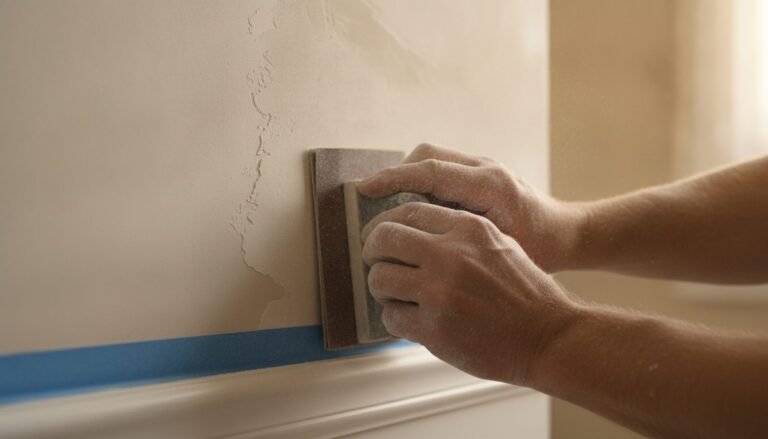
- Inadequate sanding: Light scuffing with 120-150 grit sandpaper creates the mechanical tooth that primer needs to grip. Skipping this step on smooth, glossy surfaces is a recipe for adhesion failure.
- Reassembling too soon: Waterborne alkyds feel dry to the touch in hours but take 2-4 weeks to fully cure. Rehanging doors and reinstalling hardware too early can leave permanent marks and impressions in the still-soft finish.
Why RenewBuild Uses Sherwin-Williams Emerald Urethane on Every Cabinet Project
At RenewBuild Painting, we do not offer a "good, better, best" paint tier for cabinet work. We use Sherwin-Williams Emerald Urethane Trim Enamel on every single cabinet project — because your kitchen cabinets deserve the best product available, and the cost difference between premium and budget paint is negligible compared to the total project investment.
Here is what every RenewBuild cabinet painting project includes:
- Full degreasing of every cabinet surface with a commercial-grade degreasing agent
- Complete sanding with 120-150 grit to create proper adhesion profile
- Stix bonding primer applied by spray for optimal adhesion and smooth foundation
- Two finish coats of SW Emerald Urethane Trim Enamel, sprayed through fine-finish tips
- All doors and drawer fronts removed and sprayed flat in a controlled environment
- Hardware removal and reinstallation included at no additional charge
- 3-year finish warranty covering peeling, chipping, and adhesion failure
We serve homeowners throughout Chicago and the North Shore — from Lincoln Park bungalows to Winnetka colonials — and our process is the same on every job. Premium products, professional technique, and a warranty that proves we stand behind our work.
Ready for a kitchen transformation? Request a free cabinet painting estimate from RenewBuild. We will visit your home, count every door and drawer, and provide a detailed written proposal with exact pricing. Call (312) 561-4512 or visit our contact page to schedule.
Get Your Free Estimate
We use Sherwin-Williams Emerald Urethane on every cabinet project — spray-applied for a factory-smooth finish. Every job includes a 3-year warranty on the finish.
Related Articles
Downtown, Chicago’s North Side & the North Shore
Based downtown and serving Chicago’s North Side and the North Shore suburbs, so every crew is close, on time, and familiar with the homes in your neighborhood.
Not sure if we cover your area? See all service areas or call (312) 561-4512.
RenewBuild Serves Chicago & North Shore
Looking for a painter near you? We serve homes and businesses on Chicago's North Side, Downtown and the North Shore.