How Long Does Interior Paint Last? When to Repaint
The Honest Answer: It Depends on the Room
Every paint manufacturer will tell you their product lasts "up to 10 years." And technically, that might be true — in a spare bedroom that nobody uses, with premium paint, perfect prep, and stable humidity. But real life in a Chicago home is different. Kitchens get splattered. Hallways get scuffed by backpacks and dog leashes. Bathrooms endure daily steam. Kids' rooms take a beating that no paint was truly designed for.
The real question isn't "how long does paint last?" — it's "how long does paint last in each specific room of your home, given how that room is actually used?" Here's the straight answer from a professional who repaints Chicago homes every week.
Paint Lifespan by Room: A Realistic Guide
These timelines assume quality paint (not contractor-grade), proper surface preparation, and standard residential use. If cheap paint was used or prep was skipped, cut these numbers in half.
| Room | Expected Lifespan | Why It Wears |
|---|---|---|
| Living Room | 5–7 years | Furniture scuffs, sunlight fading, general wear |
| Bedrooms | 5–7 years | Low traffic; fading and dust accumulation are the main factors |
| Kitchen | 3–4 years | Grease splatter, steam, frequent cleaning, moisture near sink |
| Bathroom | 3–4 years | Daily steam and humidity, moisture on surfaces, mildew risk |
| Hallways & Stairwells | 3–5 years | Highest traffic, scuffs from hands/bags/pets, wall contact |
| Kids' Rooms | 2–4 years | Handprints, crayon/marker, toys hitting walls, tape damage |
| Trim & Baseboards | 4–7 years | Vacuum bumps, shoe scuffs, pet scratches, cleaning chemicals |
| Ceilings | 7–10 years | Minimal contact; smoke, cooking residue, and water stains are the main threats |
Key takeaway: High-moisture rooms (kitchen, bath) and high-traffic areas (hallways, kids' rooms) need repainting roughly twice as often as low-traffic spaces like bedrooms and formal living rooms.
Signs It's Time to Repaint
You don't need to repaint on a strict calendar. Instead, watch for these visual and physical signs that your paint has reached the end of its useful life:
1. Fading and Color Inconsistency
Paint fades gradually, so you might not notice until you move a piece of furniture or take down a picture frame. If you can see a clear difference between exposed and covered wall sections, the paint has degraded significantly. South- and west-facing walls in Chicago homes fade fastest due to afternoon sun exposure, especially in homes with large windows in neighborhoods like Lincoln Park, Gold Coast, and Lakeview.
2. Peeling, Flaking, or Bubbling
This is the most obvious sign of paint failure. Peeling means the bond between the paint film and the wall surface has broken down. In Chicago homes, this is most commonly caused by moisture infiltration (especially in bathrooms and kitchens), inadequate surface preparation on the original job, or painting over a surface that wasn't properly primed. Peeling paint doesn't fix itself — the failed areas will only grow larger over time.
3. Scuff Marks and Stains That Won't Clean
Premium paint in good condition can be wiped clean with a damp cloth. When cleaning no longer removes marks — when the stains seem to be embedded in the paint surface itself — the paint's protective film has degraded. This is especially common in hallways, near light switches, and around door frames. If you find yourself scrubbing harder and getting nowhere, it's time.
4. Chalking
Run your hand across the wall surface. If a fine, powdery residue comes off on your fingers, the paint is chalking — the binder is breaking down and releasing pigment particles. Chalking is more common with flat and matte finishes, and it accelerates in rooms with high UV exposure. Once chalking begins, the paint's protective properties are compromised and repainting is necessary.
5. Mildew and Mold Spots
Dark spots appearing on painted surfaces in bathrooms, kitchens, or basements often indicate mildew growth. While surface mildew can sometimes be cleaned, recurring mildew on a painted surface means the paint's anti-microbial properties have failed. Repainting with a mildew-resistant formula (like Sherwin-Williams Emerald in satin or semi-gloss) addresses the symptom, but also check for underlying moisture issues — Chicago basements and older bathrooms are particularly prone.
What Makes Paint Last Longer
The lifespan of any paint job is determined before the first brush stroke. The four factors that matter most are, in order of importance:
1. Proper Surface Preparation
This is the single most important factor. Walls must be clean, dry, smooth, and properly primed before topcoat goes on. That means washing down surfaces to remove dust and grease, patching all holes and cracks with appropriate compound, sanding patches smooth, and applying the correct primer for the surface type. Skipping or rushing prep is the number one reason paint jobs fail prematurely. A properly prepped surface can add 2–3 years to a paint job's lifespan.
2. Paint Quality
There is a direct, measurable correlation between paint quality and longevity. Contractor-grade paint ($25–$35/gallon) typically lasts 3–5 years in normal use. Mid-range paint ($45–$60/gallon) extends that to 5–7 years. Premium paint like Sherwin-Williams Emerald ($75–$85/gallon) routinely delivers 7–10 years of performance. The acrylic resin content, pigment concentration, and additive package in premium paint are simply superior — this isn't marketing, it's chemistry.
3. Correct Primer Selection
Primer isn't a generic product — different surfaces require different primers. New drywall needs a PVA (drywall) primer. Stained or water-damaged surfaces need a stain-blocking primer (shellac-based for severe stains, water-based for light staining). Previously glossy surfaces need a bonding primer. Using the wrong primer — or skipping primer entirely — leads to adhesion failure that no amount of quality topcoat can overcome.
4. Professional Application Technique
Even the best paint, with perfect prep and correct primer, can underperform if it's applied incorrectly. Common application errors that shorten paint life include: applying too thin (insufficient film build), applying too thick (causes sagging, cracking, and extended dry times), painting in extreme temperatures or humidity, and not allowing adequate dry time between coats. Professional painters control all these variables — it's a significant part of what you're paying for.
The prep-to-paint ratio: On a well-executed paint job, prep work should represent 30–40% of the total labor time. If a contractor can finish your room in what seems like an impossibly short time, ask yourself what steps they skipped.
Chicago-Specific Factors That Affect Paint Longevity
Humidity and Temperature Swings
Chicago's climate is tough on interior paint. Summer humidity regularly exceeds 70%, while winter heating drops indoor humidity to 20–25%. This constant expansion and contraction stress tests the paint film year after year. Bathrooms and kitchens are hit hardest — the combination of Chicago's baseline humidity plus cooking steam or shower moisture pushes paint to its limits. Using a satin or semi-gloss finish in high-moisture rooms provides better moisture resistance than flat or eggshell.
Older Home Construction
Many Chicago neighborhoods — Bucktown, Pilsen, Old Town, Ravenswood — are dominated by homes built between 1890 and 1950. These homes have plaster walls rather than drywall, and plaster has unique characteristics that affect paint performance. Plaster is more alkaline than drywall, which can cause certain paints to bond poorly. It's also more prone to hairline cracking as a building settles, which telegraphs through paint. Old plaster that's been painted dozens of times may have adhesion layers that are themselves failing. Professional painters who work regularly with Chicago's older housing stock know these nuances — it's one reason local experience matters.
Radiator Heat
Many Chicago homes — especially two-flats, three-flats, and vintage buildings — still use radiator heating. The walls directly behind and adjacent to radiators experience concentrated heat cycling that yellows paint, accelerates fading, and can cause premature cracking. If you have radiator heat, expect paint behind and above radiators to degrade 1–2 years faster than the rest of the room. Using a heat-resistant primer behind radiators can help, and choosing a slightly warmer white (rather than bright white) helps mask yellowing.
Paint Quality Impact: Cheap vs. Premium
We paint Chicago homes with Sherwin-Williams Emerald on every project, and we've seen the difference firsthand compared to contractor-grade alternatives. Here's a real-world comparison:
| Characteristic | Contractor-Grade ($25–35/gal) | SW Emerald ($75–85/gal) |
|---|---|---|
| Coverage per gallon | 300–350 sqft | 350–400 sqft |
| Coats needed for full coverage | Usually 2–3 | Usually 1–2 |
| Expected lifespan | 3–5 years | 7–10 years |
| Stain resistance | Low — stains penetrate | High — stains wipe off |
| Fade resistance | Moderate | Excellent |
| VOC level | 50–100 g/L | Zero VOC (GreenGuard Gold) |
| Cost per year of life | $7–$12/gal/year | $8–$12/gal/year |
The per-year cost is nearly identical — but you get dramatically better performance, easier maintenance, and better indoor air quality with the premium product. When you factor in the labor cost of repainting sooner with cheap paint, premium paint actually costs less over a 10-year period.
Maintenance Tips to Extend Your Paint's Life
You can add 1–3 years to any paint job's lifespan with basic maintenance. None of this is complicated:
- Dust walls annually. Use a microfiber cloth or a dry Swiffer to remove dust buildup, especially in rooms with forced-air heating. Dust traps moisture and accelerates degradation.
- Clean spots promptly. The longer a stain sits on painted surface, the deeper it penetrates. Wipe marks and splashes within 24 hours using a damp cloth with mild soap. Never use abrasive cleaners or scrub pads on painted walls.
- Control humidity. Run bathroom exhaust fans during and for 15 minutes after showers. Use your kitchen range hood when cooking. In winter, a whole-home humidifier set to 35–40% prevents the extreme dryness that causes paint to crack.
- Touch up early. Small scuffs and marks are easy to touch up if you have leftover paint from the original job. The longer you wait, the more the surrounding paint fades, making touch-ups more visible. Keep a labeled quart of your room colors in the basement or garage.
- Address water issues immediately. Any water intrusion — roof leak, plumbing leak, condensation — damages paint rapidly. Fix the source first, then repaint the affected area after surfaces have fully dried (which can take 2–4 weeks for drywall after significant water exposure).
- Protect high-contact areas. Install clear wall protectors behind door handles. Use chair rail or wainscoting in dining rooms. Add a coat of semi-gloss on stairwell walls where hands naturally trail. These small investments prevent the most common sources of paint wear.
Store your leftover paint correctly: Seal cans tightly, store upside down (creates an airtight seal), and keep at room temperature — not in an unheated Chicago garage where freeze-thaw cycles will ruin the paint. Label each can with the room, color name, and date. Most quality paint is usable for 5+ years when stored properly.
When It's Time: What to Expect from a Professional Repaint
When you've decided it's time to repaint, the process with a professional painter should include:
- Surface assessment — identifying areas that need patching, priming, or special treatment
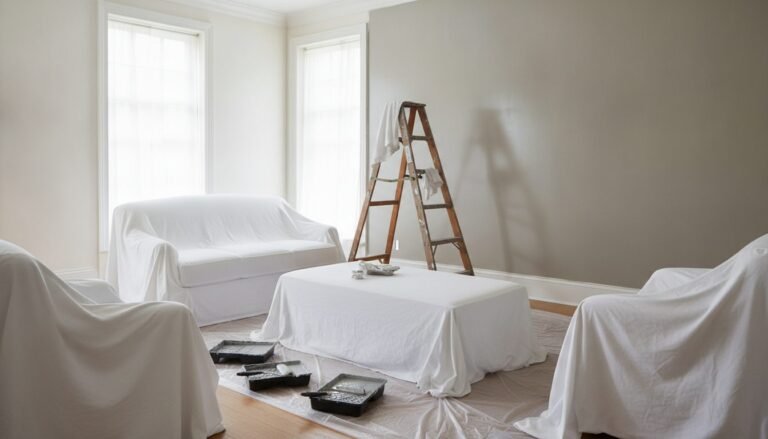
- Furniture protection — moving and covering everything in the work area
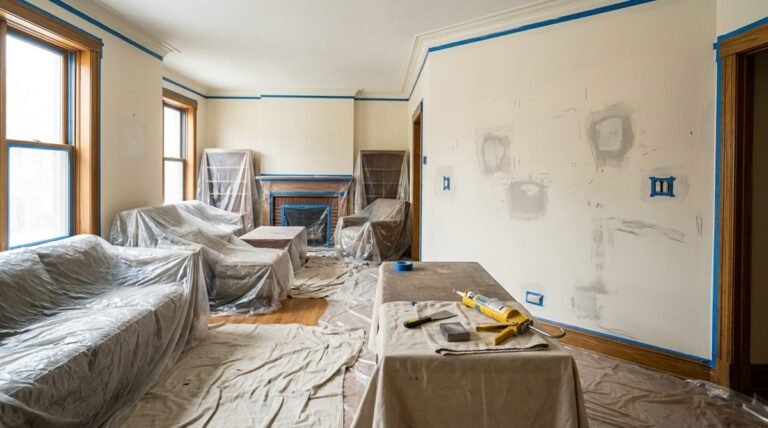
- Surface preparation — patching, sanding, cleaning, and priming as needed
- Application — typically two coats of premium paint (one coat if doing a color-matched refresh)
- Inspection and touch-up — reviewing every surface in proper lighting before calling the job complete
- Cleanup — removing all protection, replacing furniture, and leaving the space clean
A professional repaint of a standard Chicago bedroom takes 1 day. A full 3-bedroom home interior typically takes 3–5 days, depending on the amount of prep work needed.
RenewBuild Painting uses Sherwin-Williams Emerald on every interior project — no exceptions, no substitutions. Every job includes thorough prep, primer where needed, two finish coats, and a 3-year workmanship warranty. We're EPA Lead-Safe certified (NAT-F308152-1) for Chicago's older homes. Call (312) 561-4512 for a free estimate or schedule online.
Get Your Free Estimate
We'll assess your walls, recommend the right approach, and give you a detailed written quote. Premium Sherwin-Williams Emerald products, professional prep, and a clear timeline — every time.
Related Articles
Downtown, Chicago’s North Side & the North Shore
Based downtown and serving Chicago’s North Side and the North Shore suburbs, so every crew is close, on time, and familiar with the homes in your neighborhood.
Not sure if we cover your area? See all service areas or call (312) 561-4512.
RenewBuild Serves Chicago & North Shore
Looking for a painter near you? We serve homes and businesses on Chicago's North Side, Downtown and the North Shore.